What Counts as an Ice Cave Here
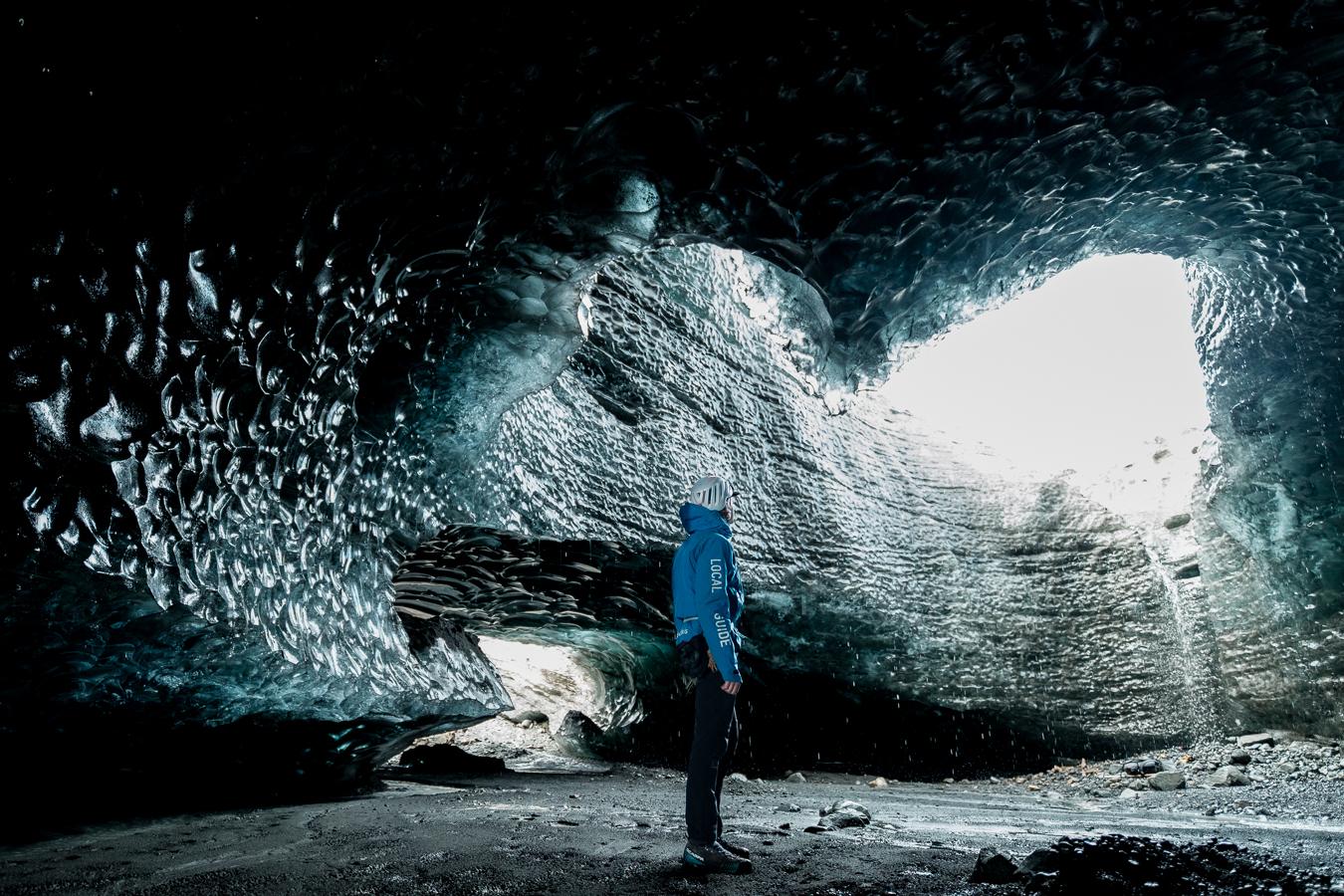
Three different things get called ice caves in Iceland, and mixing them up is how bookings disappoint. Natural ice caves are carved by meltwater and movement inside a glacier — seasonal, unpredictable in shape, and the reason photographers cross the island. The man-made tunnel inside Langjökull is carved by machines and run as a maintained attraction — an engineered interior that typically operates year-round, though glacier weather, access and maintenance can still affect a departure. And Perlan's indoor exhibition in Reykjavík is a museum installation shaped like an ice cave — genuinely good for families and brief stops, but no glacier around it. Every comparison on this site keeps the three firmly separate, including the prices.
Katla — The Ash-Striped Cave Under Mýrdalsjökull
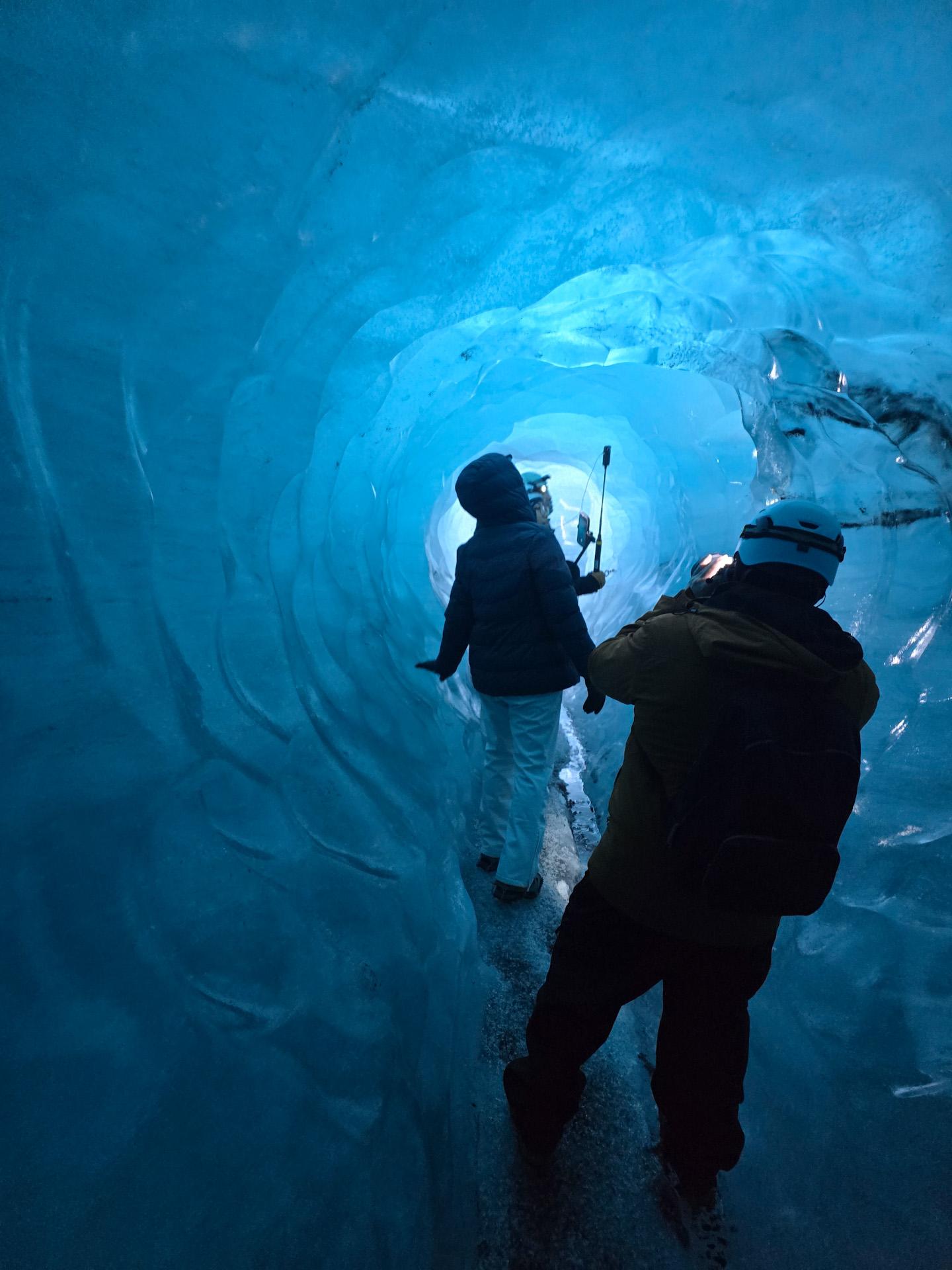
Katla hides under the Mýrdalsjökull ice cap, above the volcano of the same name, and its ice carries the evidence: stripes of black ash between bands of blue, a look you will not find in the all-blue caves under Vatnajökull. Tours meet in Vík on the south coast and finish the journey by super jeep across the Mýrdalssandur sands — the drive is part of the experience, and the walking inside is gentle by cave standards.
With its calendar running when the bare-blue caves close, Katla is the natural cave most likely to be enterable outside the coldest months, which makes it the practical answer for spring and autumn trips. Vík sits about two and a half hours from Reykjavík, and several full-day tours from the capital wrap the cave in with the waterfalls and the black beach.
The Crystal Caves of Vatnajökull at Jökulsárlón
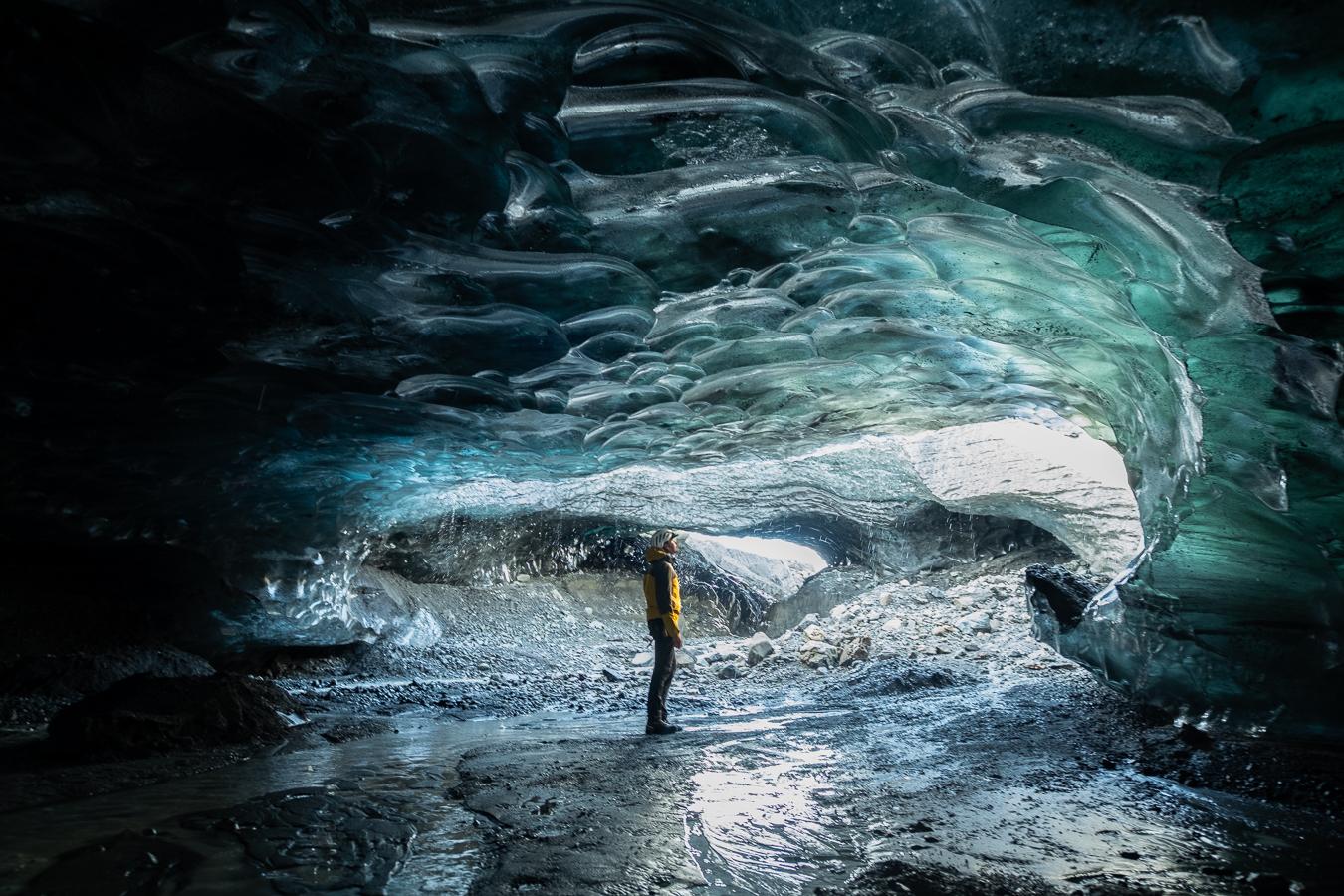
The caves under Vatnajökull — reached from the Jökulsárlón glacier lagoon on the southeast coast — are the images that made Iceland's ice caves famous. Dense, ancient ice absorbs the warmer colours far more strongly than blue, and the chambers meltwater carves each cold season glow with an intensity the photographs only approximate. Operators such as Local Guide of Vatnajökull, Glacier Trips and Ice Explorers run short formats — the Original's listing puts the day at three to four hours and the glacier walk at one to five and a half kilometres. You get a super jeep from the lagoon car park, spikes and a helmet, and time to stand in the light.
Two caveats worth stating. These are natural seasonal caves — every operator states that the exact chamber, its shape and its location change with the year's conditions and are chosen by the guides for safety. And the lagoon is nearly five hours from Reykjavík, which in practice means an overnight in the southeast. The reward is the single most photographed ice experience in the country.
Compare Vatnajökull ice cave tours
The Remote Caves, on Foot
For a smaller number of travellers, the short versions undersell the glacier. Two expeditions from Jökulsárlón spend three to six hours actually hiking the ice with crampons — Glacier Trips' small-group tour for ages 14 and up, and Ice Walkers' demanding route to a cave the short tours cannot reach. At Skaftafell, an hour west of the lagoon, the standard format is a hybrid: a real glacier hike on the Falljökull outlet with a natural cave as its centerpiece. If the phrase 'earn the view' appeals, these are your tours.
Compare Skaftafell cave and hike tours
The Langjökull Tunnel — Into the Glacier
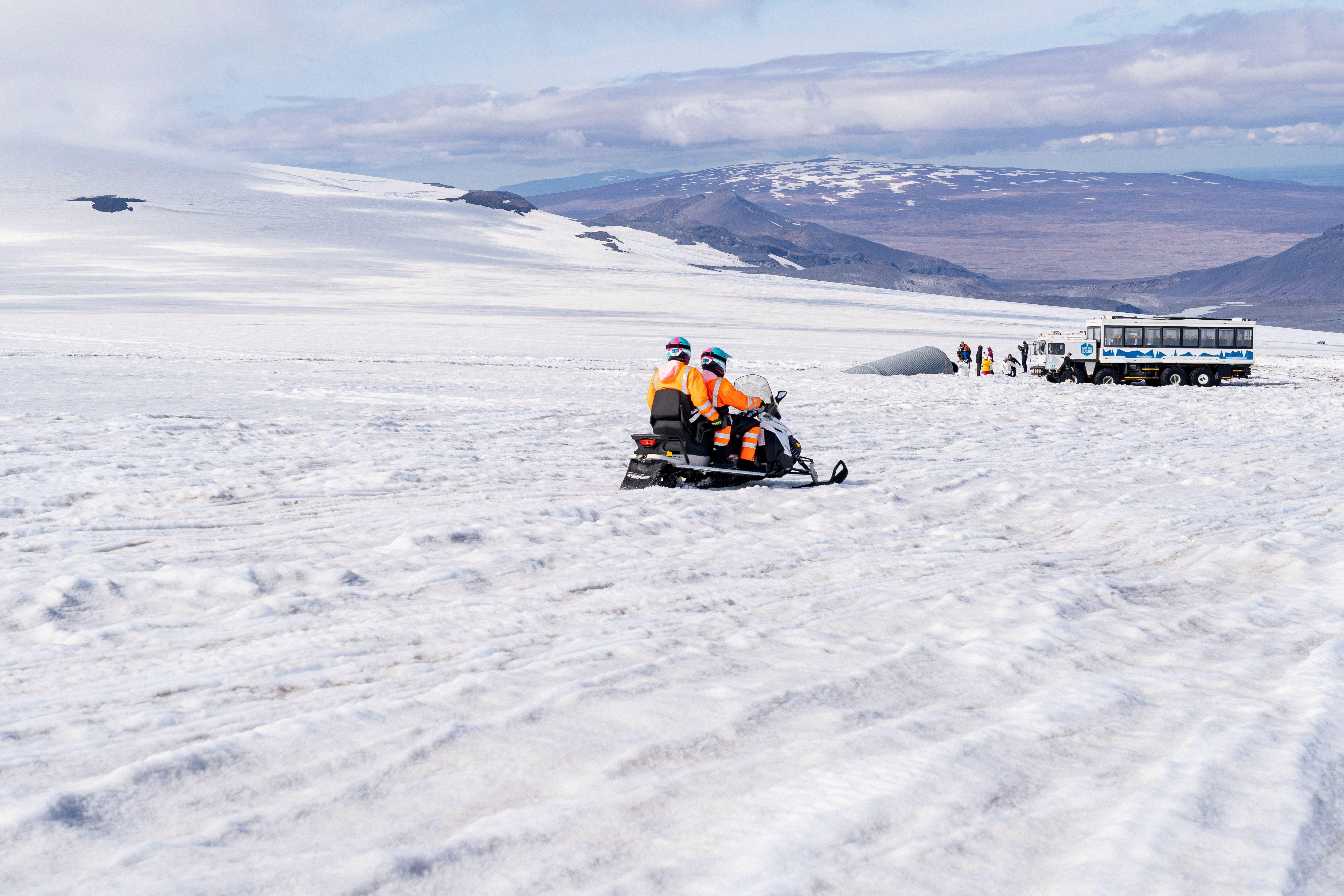
West Iceland's answer is engineering: a tunnel system dug straight into the Langjökull ice cap, with corridors and chambers descending through layered ice that its operator describes as the world's longest man-made glacier tunnel. Where the natural caves are seasonal, the tunnel is carved and maintained — a lit, walkable interior that typically operates through the year, with the caveat that weather, glacier access and re-carving maintenance can still shape a given departure and how the corridors look.
The classic way in combines it with a snowmobile ride across the glacier's cap from Húsafell, while monster-truck tours from Gullfoss and snowmobile runs from Geysir visit natural caves on the same ice cap. The tunnel suits fixed dates, families with a wide age spread, and travelers pairing the ice with the Golden Circle rather than the south coast.
Compare Langjökull cave and tunnel tours
Perlan — The Indoor Exception
For completeness: Perlan's Wonders of Iceland exhibition in Reykjavík ends with a walk-through indoor ice cave, chilled and sculpted to mimic the real thing. It is a museum, not a glacier — there is no guide reading the ice, no super jeep, no weather. For families with very young children, tight schedules or a city-only stay, it is a legitimate option, and it costs a fraction of any glacier tour. It is not, and should not be sold as, an ice cave tour — which is why this site lists it only as a labelled alternative, never inside a cave comparison.
Trying to match a cave to your dates? The calendars are the deciding factor — the natural caves around Vatnajökull are creatures of the cold months, while Katla and the tunnel run different schedules.
Katla Versus the Crystal Cave — The Choice in Practice
| Katla | Crystal caves (Vatnajökull) | Langjökull tunnel | |
|---|---|---|---|
| The look | Blue ice striped with black volcanic ash | Deep, even sapphire blue | Blue layered ice, lit carved corridors |
| Meeting point | Vík, ~2.5 h from Reykjavík | Jökulsárlón lagoon, ~5 h from Reykjavík | Húsafell, ~2 h from Reykjavík |
| Getting to the ice | Super jeep across the sands | Super jeep onto the glacier | Snowmobile ride + guided walk |
| Effort | Gentle — short walks | Gentle — short walks with spikes | Moderate — machines do the climbing |
| Calendar | Runs through the year | Mid-October through April | Typically year-round, maintained |
| From (per person) | €158 | €146 | €278 |
Choosing for Your Trip
Put the three questions in order and the answer usually announces itself. First, when — the seasonal guide above decides between regions before any preference does. Second, where you will sleep — a night in Vík or Höfn reorganizes the whole map. Third, what kind of day you want around the cave itself: a three-hour visit, a full coach day of waterfalls, or a hike where the ice is the whole story.
When you have a region, the comparison pages on this site put the operators side by side with real prices, ratings and meeting points — start from the ice cave tour overview and follow the coast you have chosen.